
June in Kelowna brings longer days, warmer soil, and the start of the dry season that defines Okanagan summers. Your residential landscape in Kelowna faces a narrow window right now: conditions are ideal for strengthening roots, adjusting irrigation, and preparing for the heat and potential water restrictions ahead. Miss this window, and you'll spend July troubleshooting brown patches, cracked hardscapes, and stressed plantings instead of enjoying your outdoor space.
After 15+ years designing and maintaining landscapes across Kelowna and West Kelowna, we've watched homeowners make the same mistake every June: waiting until the lawn turns brown or the irrigation system fails during a heatwave. June is your yard's last chance to prep before peak stress. Here's exactly what your Okanagan property needs right now.
(https://exquisitelandscaping.ca/integrating-pools-and-water-features-into-your-kelowna-landscape/) June yard care irrigation]
Okanagan Landscaping in June: Why Timing Matters

The Climate Shift Happening Right Now
June in Kelowna typically sees daytime highs climbing into the mid-20s Celsius, with soil temperatures finally warm enough for active root growth. Rainfall drops sharply compared to May, often to less than 30mm for the entire month. Your yard transitions from spring moisture to summer drought stress in a matter of weeks.
This shift exposes vulnerabilities. Irrigation zones that seemed fine in May suddenly leave dry spots. Mulch that looked adequate in April has decomposed or blown thin. Plants installed last fall face their first real heat test. June gives you two to three weeks to catch and correct these issues before they become expensive problems.
Fire-Smart Maintenance Before Wildfire Season Peaks
Wildfire season in the Okanagan typically intensifies in July and August, but your fire-smart landscaping maintenance needs to happen in June. Dead plant material from spring, dry grass clippings, and debris tucked against your home's foundation all become ignition points once temperatures spike and humidity drops.
Walk your property now and remove:
- Dead branches and leaf litter within 10 meters of structures
- Dried ornamental grasses that weren't cut back in early spring
- Mulch or bark piled against siding or deck posts
- Overhanging tree branches within two meters of your roof
We've worked on fire-smart landscaping projects throughout Kelowna where homeowners discovered vulnerabilities only after a close-call evacuation order. June maintenance reduces your risk before the Interior Health wildfire outlook shifts to high or extreme. Our outdoor living designs integrate fire-smart principles without sacrificing the beauty of your yard.
Water Restrictions and Your Irrigation Strategy
Kelowna's water restrictions typically begin in May or June, depending on reservoir levels and early-season temperatures. Even if Stage 1 restrictions feel lenient, your irrigation system needs optimization now. Once Stage 2 or 3 restrictions hit, you're locked into specific watering days and times, and there's no room to troubleshoot a failing zone or head.
Check your system's coverage this month. Run each zone during daylight and look for:
- Misting heads that waste water to evaporation
- Dry spots indicating a clogged emitter or misaligned spray pattern
- Overwatering in shaded areas that stay damp while sunny zones go dry
- Runoff on slopes where water hits faster than soil absorbs it
Adjusting now saves water, keeps your plantings healthy, and prevents the panic of a brown lawn in July when you're restricted to twice-weekly watering.
Summer Yard Care Kelowna: The June Checklist
Irrigation System Tune-Up
Your irrigation system worked through winter freeze-thaw cycles, spring runoff, and temperature swings. June is when hidden damage shows up.
Start with a full system test. Turn on each zone and walk the coverage area. Look for geysers indicating a cracked lateral line, puddles from a leaking valve, or heads that don't pop up. Check your controller's programming: many homeowners still run spring schedules that overwater now that soil has warmed and plants are actively growing.
For Okanagan landscapes, deep infrequent watering beats short daily cycles. Set your system to water two to three times per week, running long enough to penetrate 15 to 20 centimeters into the soil. Shallow daily watering creates weak root systems that can't handle heat stress.
If you haven't upgraded to a smart controller, June is the time. Weather-based irrigation controllers adjust watering based on real-time temperature, humidity, and rainfall data. In our projects across Kelowna, smart systems typically reduce water use by 20 to 30 percent compared to traditional timers while improving plant health. We cover the benefits in detail in our custom hardscaping Kelowna installations, where irrigation integration is critical to protecting investment-grade stonework.
Mulch Refresh and Soil Moisture Retention
Mulch breaks down faster in the Okanagan's dry heat than in humid climates. A 7-centimeter layer applied last fall may have composted down to 3 or 4 centimeters by June, especially in high-sun areas. Thin mulch exposes soil to evaporation, allows weed seeds to germinate, and lets soil temperatures spike, stressing plant roots.
Refresh mulch now to a consistent 7 to 10 centimeters across planting beds. Use organic mulches like shredded bark or wood chips that decompose slowly and improve soil structure over time. Keep mulch 5 to 10 centimeters away from plant stems and tree trunks to prevent rot and pest issues.
In fire-smart zones within 1.5 meters of your home, switch to non-combustible ground covers like decorative rock or gravel. Organic mulch in these high-risk areas creates fuel for embers during wildfire events. We've integrated rock mulch into hundreds of Kelowna landscapes where it performs double duty: fire protection and water-wise design.
Lawn and Turf Management
Your lawn enters active growth in June, and how you manage it now determines whether it survives July and August with minimal water.
Mow high. Set your mower blade to 7 to 8 centimeters. Taller grass shades soil, reduces evaporation, and develops deeper roots that access moisture lower in the profile. Scalping your lawn to 4 or 5 centimeters might look tidy, but it creates heat-stressed turf that browns out by mid-July.
Fertilize lightly if you didn't in May. A slow-release nitrogen application now supports root development without forcing excessive top growth that demands extra water. Avoid high-nitrogen quick-release fertilizers in June; they push lush growth right as heat stress begins, setting your lawn up for failure.
Consider letting low-traffic areas go dormant. Okanagan lawns naturally slow growth and brown slightly during peak summer. A dormant lawn isn't dead; it's conserving resources. If water restrictions tighten or your irrigation capacity is limited, prioritize high-visibility areas and let back sections rest.
Drought-Stress Monitoring in New Plantings
Plants installed within the past 12 months haven't established deep root systems yet. June heat exposes which ones are struggling.
Walk your property every few days and check for early drought stress signals:
- Wilting or curled leaves during morning hours (afternoon wilt is normal in heat)
- Leaf edges turning brown or crispy
- Slowed growth or smaller new leaves compared to spring
- Premature leaf drop on shrubs and trees
New plantings may need supplemental hand-watering even if your irrigation system runs regularly. Roots are still shallow, and automated zones often miss the specific needs of individual plants. A deep soak with a hose once or twice a week can save a struggling shrub that your sprinklers aren't reaching.
For drought-resistant landscaping in Kelowna, June is also the last good month to install new plantings before summer heat. We focus on native and adapted species like penstemon, sage, and ornamental grasses that thrive in Okanagan conditions once established. If you're planning additions, get them in the ground now so they have a few weeks to root before peak stress.
Hardscape Inspection and Maintenance
Patios, retaining walls, and walkways expand and contract with temperature swings. June's warming soil can reveal issues that developed over winter.
Inspect stone and concrete surfaces for:
- Cracks or shifting pavers from freeze-thaw cycles
- Settling or tilting sections indicating subsurface erosion
- Weed growth in joints that needs removal before it spreads
- Efflorescence (white mineral deposits) on retaining walls from moisture migration
Reseal porous stone and pavers if the surface no longer beads water. Sealing protects against staining, reduces weed seed germination in joints, and extends the life of your hardscape investment. According to natural stone maintenance standards, resealing every two to three years maintains optimal performance in climates with freeze-thaw exposure.
We've seen Kelowna homeowners ignore minor hardscape cracks in June, only to face major repairs by fall when water infiltrates and frost pressure widens the damage. Catching issues now costs a fraction of full reconstruction later. Our luxury pool installation Kelowna projects integrate hardscape and pool decking with expansion joints and drainage designed for Okanagan freeze-thaw, eliminating the cracking issues common in poorly planned installations.
Irrigation Tech Every Okanagan Yard Needs
Smart Controllers and Soil Sensors
Traditional irrigation timers water on a fixed schedule regardless of weather. You end up watering during rain, overwatering after cool spells, and underwatering during heat spikes.
Smart irrigation controllers connect to local weather data and adjust watering automatically. Some models include soil moisture sensors that measure actual root-zone moisture and skip cycles when soil is already wet. In Kelowna's variable June weather (cool rainy weeks followed by sudden heat), smart systems eliminate guesswork.
We install controllers that integrate with your smartphone, letting you adjust zones remotely and receive alerts for system failures or unusual water use. Homeowners appreciate the control, especially during travel or when Stage 3 restrictions require precise watering windows.
Drip Irrigation for Planting Beds
Sprinkler systems work for lawns, but planting beds need precision. Drip irrigation delivers water directly to root zones with minimal evaporation loss.
Drip lines or emitter tubing run along the soil surface (hidden under mulch) and release water slowly over extended periods. A 30-minute sprinkler cycle might deliver 10 millimeters of water in minutes, half of which evaporates or runs off. A two-hour drip cycle delivers the same volume directly to roots, with near-zero waste.
For Kelowna properties with terraced beds, slopes, or mixed sun/shade zones, drip irrigation solves the coverage and efficiency problems that plague traditional spray systems. We retrofit drip into existing landscapes regularly, and homeowners report 30 to 40 percent water savings within the first season.
Rainwater Harvesting and Supplemental Sources
June rainfall in Kelowna is unpredictable. Some years deliver periodic showers; others stay bone-dry for weeks. Rainwater harvesting systems capture roof runoff during spring and early June, storing it for use during peak summer.
A simple rain barrel system costs a few hundred dollars and provides supplemental water for container plantings and high-value garden beds. Larger cistern systems (1,000 to 5,000 litres) can supply meaningful irrigation volume during water restrictions, especially for hand-watering trees and shrubs.
We've integrated rainwater systems into outdoor kitchens Kelowna projects where clients wanted off-grid water for rinsing vegetables or filling outdoor sinks. The same infrastructure supports landscape irrigation when municipal restrictions tighten.
When to Call a Professional
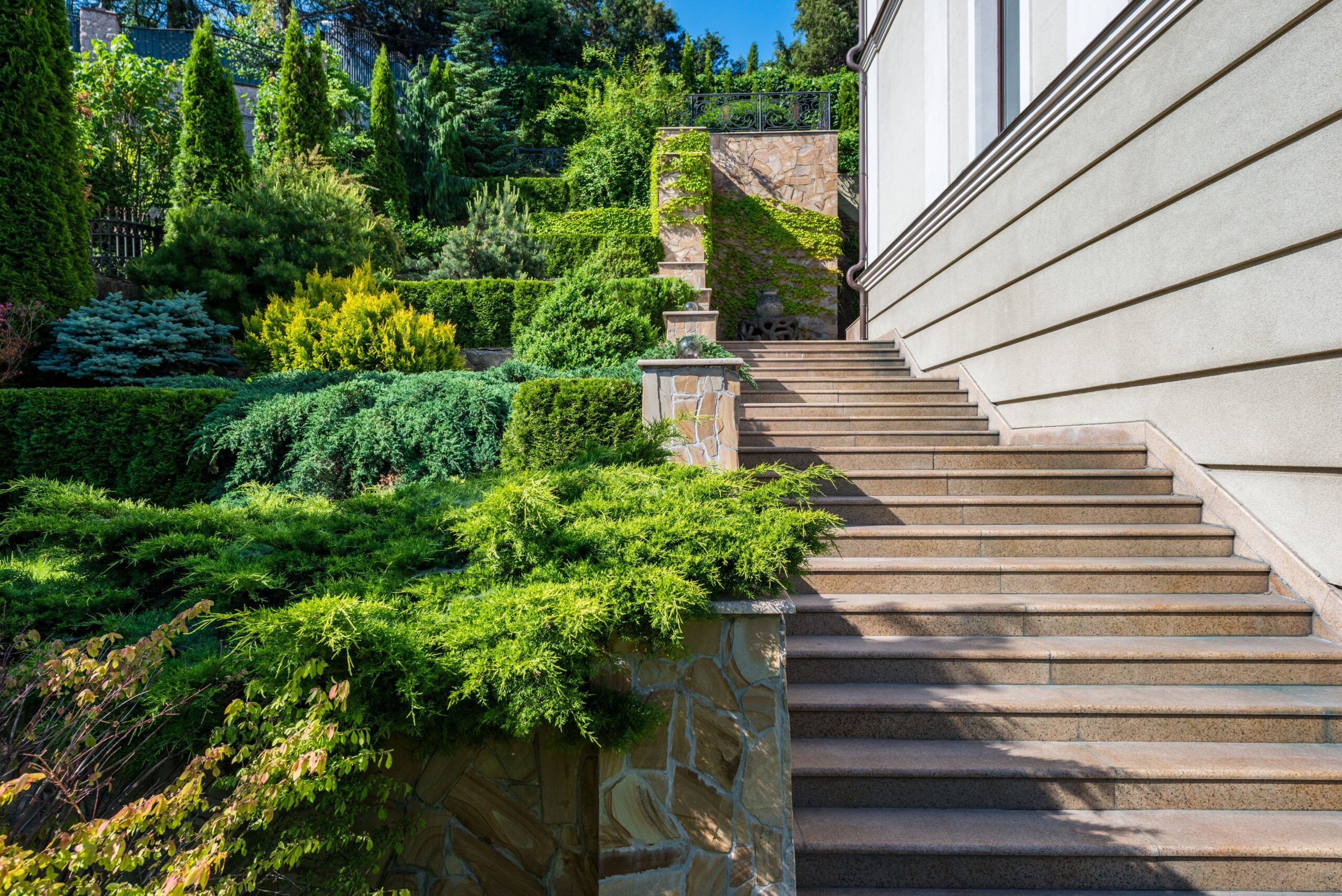
Some June tasks are straightforward: refreshing mulch, adjusting sprinkler heads, mowing higher. Others require expertise.
Call a professional if you're dealing with:
- Irrigation system failures you can't diagnose (electrical issues, valve problems, controller malfunctions)
- Hardscape damage beyond cosmetic cracks (structural settling, retaining wall movement)
- Large-scale fire-smart renovations requiring plant removal and replanting
- Drainage problems causing standing water or erosion after spring runoff
- Landscape redesign to improve water efficiency or integrate outdoor living features
We've spent 15+ years solving challenging landscape problems across Kelowna and West Kelowna. Slope stabilization, complex irrigation retrofits, and full-property fire-smart conversions require specialized equipment and knowledge of local soil, climate, and regulations. Our Commercial Landscaping division handles year-round maintenance for property managers who need reliable seasonal transitions without the guesswork, and we bring the same expertise to residential projects.
June work done right prevents July emergencies. A professional assessment now costs less than emergency repairs during a heatwave or water-restriction panic.
Frequently Asked Questions
How often should I water my Kelowna lawn in June?
Water your lawn two to three times per week, applying 2.5 to 4 centimeters of water per session. Deep infrequent watering encourages roots to grow deeper, improving drought tolerance. Avoid daily shallow watering, which creates weak root systems. Check Kelowna's current water restriction stage and adjust your schedule to comply with allowed watering days.
What are the best drought-resistant plants for Kelowna landscapes?
Native and adapted species like penstemon, sage, lavender, ornamental grasses (blue fescue, feather reed grass), and shrubs like potentilla and sumac thrive in Okanagan heat with minimal water once established. Avoid high-water plants like hydrangeas and astilbes unless you're willing to hand-water through summer. June is the last ideal month to install new drought-resistant plantings before peak heat.
When do Kelowna water restrictions usually start?
Kelowna typically moves to Stage 1 or Stage 2 water restrictions in May or early June, depending on snowpack, reservoir levels, and early-season temperatures. Restrictions limit lawn watering to specific days and times, and later stages prohibit decorative water features and non-essential outdoor water use. Check the City of Kelowna website for current restriction levels and update your irrigation schedule accordingly.
How do I know if my irrigation system has a leak?
Run each zone individually and walk the coverage area looking for soggy spots, geysers, or puddles that form away from sprinkler heads. Check your water meter before and after running a zone; if the meter continues spinning after the zone shuts off, you have a leak somewhere in the line. Unexplained spikes in your water bill during non-summer months also indicate hidden leaks. Call a professional if you can't locate the source.
Keep Your Yard Thriving Through Okanagan Summer
June gives your Kelowna landscape a narrow prep window before summer heat and water restrictions arrive in force. Irrigation tune-ups, mulch refresh, fire-smart maintenance, and drought-stress monitoring now prevent expensive failures and ugly brown patches later. Your residential landscape in Kelowna can stay healthy and beautiful through the driest months if you address vulnerabilities this month.
We've guided hundreds of Okanagan homeowners through seasonal transitions since 2010, solving irrigation problems, upgrading water-wise plantings, and integrating outdoor living spaces that perform year-round. Whether you need a full irrigation system overhaul, fire-smart landscaping consultation, or a summer maintenance plan tailored to your property, we'll walk your yard, identify risks, and build a solution that fits your goals and budget.
Book a summer landscape health check today. We'll assess your irrigation coverage, check hardscape condition, and recommend the highest-impact fixes before July heat arrives. Call (778) 363-0520 or visit our page to schedule your site visit.