
Introduction
Outdoor lighting changes how your yard works after sunset.
Paths feel safer. Steps are easier to read. Dining areas stay inviting well into the evening. Instead of dark corners or harsh glare, the space feels calm, intentional, and easy to use.
In Kelowna, good outdoor lighting isn’t about adding more fixtures it’s about placing the right light in the right places. We design lighting systems that extend how long you use your yard, improve safety, and enhance the look of your landscape without overpowering it or the night sky.
Why Outdoor Lighting Matters More Than You Think
During the day, your yard relies on layout and planting to guide movement and frame views. At night, lighting takes over that role.
Well-designed outdoor lighting:
- Makes walking routes and steps feel confident and safe
- Extends the usable hours of patios, outdoor rooms, and kitchens
- Adds depth and atmosphere without visual clutter
- Reduces reliance on temporary or portable lighting
- Improves security without harsh floodlights
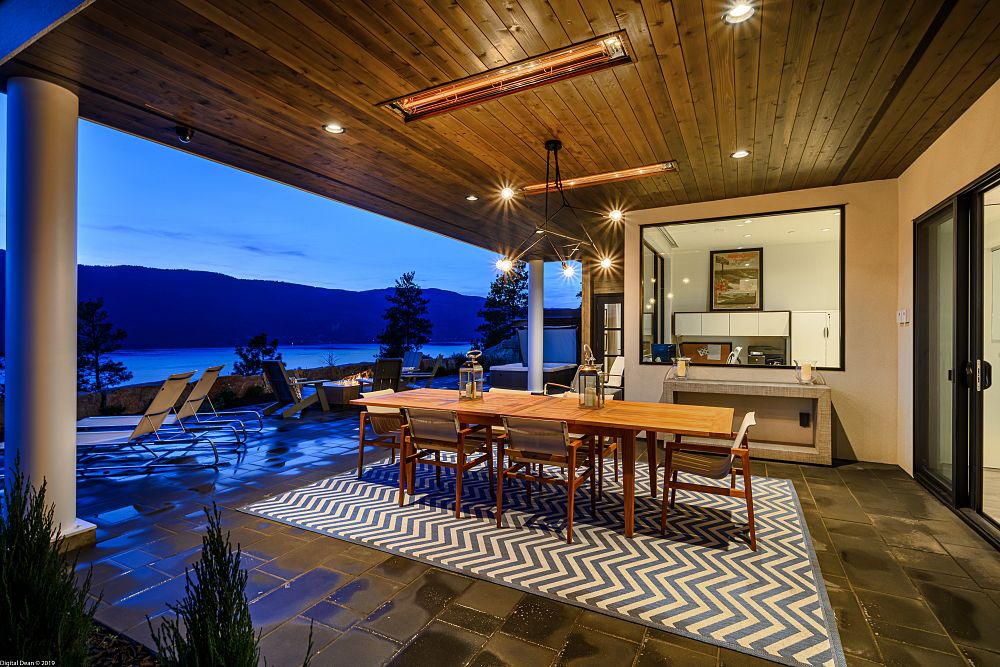
When lighting is planned as part of the landscape not added afterward the entire space feels more refined.
Start With How You Move, Not the Fixtures
The best lighting plans begin with a short walk-through at dusk.
We look at:
- Where people actually walk after dark
- Steps, edges, and elevation changes that need clarity
- Areas where glare from streets or neighbors should be controlled
- Spaces where light should invite gathering, not dominate
From that, we design a lighting plan that supports how the yard is used, not just how it looks on a fixture spec sheet.
The Three Layers That Make Lighting Feel Effortless
Good outdoor lighting uses layers that work together.
Navigation Lighting
Low-glare path and step lights guide movement without lighting the sky. Fixtures stay low, shielded, and aimed precisely so the ground is visible and eyes stay comfortable.
Task Lighting
Downlights over dining tables, grills, and prep areas provide usable light exactly where it’s needed. The goal is visibility not brightness in your face.
Accent Lighting
A small number of accents add depth and texture. A feature tree, a stone wall, or a water element becomes a quiet focal point instead of disappearing at night.
Less is almost always more. One well-placed beam beats a yard full of light every time.
Color Temperature Sets the Mood
Warm light feels better outdoors.
We typically design around:
- 2700–3000K for patios, paths, and gathering areas
- Limited neutral white only where true task visibility matters
Mixing color temperatures randomly makes spaces feel chaotic. A consistent warm baseline keeps the yard calm, welcoming, and visually cohesive.
Placement, Beam Spread, and Glare Control
The same fixture can look completely different depending on placement.
We control:
- Beam width to avoid hot spots
- Mounting height to shape shadows naturally
- Shielding to keep light off eyes and neighboring properties
Path lights stay low. Step lights hug the riser. Downlights are tucked into pergolas or structures to mimic indoor ceiling light. The result feels intuitive, not theatrical.
Controls That Make Lighting Easy to Use
Lighting fails when it’s annoying to control.
We group fixtures into simple zones and scenes:
- Everyday use
- Entertaining
- Late-night or security
Everything runs through dimmers, timers, or an app so one action sets the entire mood. Timers track sunset and sunrise automatically, which is especially important in winter.
Safety and Electrical Details That Matter
Outdoor lighting has to be done right.
That means:
- Proper burial depths and conduit routing
- Fixtures rated for wet locations near irrigation and splash zones
- GFCI protection where required
- Clean, serviceable connections that last
We also coordinate lighting with irrigation layouts so spray never hits fixtures and wet surfaces don’t create glare.
Energy Efficiency Without Compromise
Modern LED systems deliver excellent light with very low power draw.
We specify:
- Quality LEDs with stable color over time
- Efficient drivers that don’t flicker or fail early
- Output levels matched to use not oversized wattage
The result is a system that runs quietly, lasts years, and doesn’t inflate your power bill.
Lighting and Planting Work Best Together
Plants and lighting should be designed as one conversation.
We place fixtures where:
- Light grazes bark or stone texture
- Grasses catch movement instead of hotspots
- Evergreens maintain structure in winter
As plants mature, we adjust aim instead of increasing brightness. The yard evolves without losing its nighttime balance.
Water Features and Reflective Surfaces
Water doubles the effect of light and mistakes.
We place fixtures:
- Far enough from water to avoid glare
- Aimed to catch ripples and movement
- Positioned for calm reflection or sparkle, depending on the goal
This approach keeps water features elegant instead of blinding.
Budget Tiers That Protect Value
If you’re phasing lighting, spend where it compounds.
Tier 1: Backbone
Conduit, transformer location, zoning, and controls.
Tier 2: Safety
Steps, paths, and entries that make movement safe every night.
Tier 3: Comfort
Dining, grill, and gathering areas with usable task lights.
Tier 4: Signature
Feature trees, walls, and scene-based dimming.
We always plan for expansion so future additions don’t require re-trenching.
Built Clean, Tested at Dusk
We plan lighting during design, install utilities, and test everything at dusk when the space tells the truth.
That means:
- Adjustments before trenches are closed
- Clean wiring and protected finishes
- A final scene setup that feels intuitive from day one
Ready to See Your Yard in a New Light
If your yard disappears after sunset or feels harsh and overlit we can design an outdoor lighting system that adds hours, improves safety, and feels calm instead of commercial.
Browse our project gallery to see how subtle lighting changes a space, then book a consultation to create a clear plan with scope, schedule, and budget guardrails.
FAQs
Will outdoor lighting increase my power bill?
No. Modern LED systems use very little energy and are often more efficient than temporary or flood lighting.
How do we avoid harsh security lighting?
Warm color temperatures, shielded fixtures, and motion sensors provide security without blinding people or cameras.
Do we need permits?
Low-voltage lighting typically does not. Any line-voltage work is handled to code with licensed trades.
Can lighting be added to an existing yard?
Yes. With careful routing and trenching, we can add lighting without tearing up finished landscapes.